



Skip to the main content.

6 min read

Optimizing Network Performance in Urban Areas: A Guide for High-Density Connectivity

For telecommunications providers and ISPs, urban areas represent the ultimate paradox: the highest concentration of customers and the most challenging environment for network performance. High-density populations, physical obstructions, and massive data demand from smart city infrastructure and Internet of Things (IoT) devices create a constant battle against network congestion, high latency, and packet loss. Simply adding more macro-level capacity is no longer a financially or logistically viable solution.

Delivering seamless connectivity in dense urban environments requires a sophisticated, multi-layered optimization framework. This article explores practical strategies to optimize network performance, moving from foundational infrastructure improvements to advanced, AI-driven management techniques. We will cover the core challenges of congestion and provide a roadmap for building a responsive, efficient, and future-proof urban network.


The Core Challenge: Managing Congestion in High-Density Environments

Urban network optimization is fundamentally a battle against congestion. It’s not just about peak usage times; it's about the constant, dynamic mix of traffic, from low-latency video calls to high-bandwidth streaming and sporadic IoT data. The unique physics of dense urban environments—with signal reflection, absorption by buildings, and widespread spectrum interference—complicates resource allocation and creates performance bottlenecks that are difficult to predict.

Identifying Performance Bottlenecks with Network Monitoring

Before you can optimize, you must establish a detailed baseline. Use advanced network monitoring tools to track key performance indicators (KPIs) like jitter, packet loss, and round-trip time, not just peak bandwidth. This data must be correlated with geographic "hotspots" and time of day. For example, a transit hub’s network load profile at 8:00 AM is completely different from a stadium's profile at 8:00 PM, and your optimization strategies must reflect this. This granular data reveals where to first apply traffic management and resource allocation.

The Dueling Priorities: Latency vs. Bandwidth

In dense urban settings, high latency often degrades the user experience more than a lack of raw bandwidth. A 1 Gbps connection with 150ms of latency feels sluggish for real-time applications like cloud gaming or teleconferencing. Effective optimization strategies must differentiate traffic; a 4K video stream requires sustained bandwidth, while a network of smart traffic sensors demands ultra-reliable low-latency communication (URLLC). Treating all data packets equally is a primary cause of poor overall network performance.


Foundational Optimization Strategies for Urban Infrastructure

While advanced software solutions are transformative, they must be built upon a robust and flexible physical layer. For ISPs, optimizing the existing network infrastructure is the critical first step to improve performance. This means maximizing the efficiency of every spectrum asset and signal broadcast to minimize coverage gaps and signal interference.

Strategic Spectrum Management and Re-farming

Spectrum is the most finite resource in any city. Actively "re-farming" legacy spectrum, such as reallocating bands previously used for 2G or 3G to modern 5G and LTE services, is now essential. Operators should implement Dynamic Spectrum Sharing (DSS) to allow 4G and 5G to coexist in the same frequency band, allocating resources based on real-time device demand. This approach maximizes the ROI on existing spectrum licenses and avoids a disruptive "rip-and-replace" upgrade cycle.

Densification with Small Cells and DAS

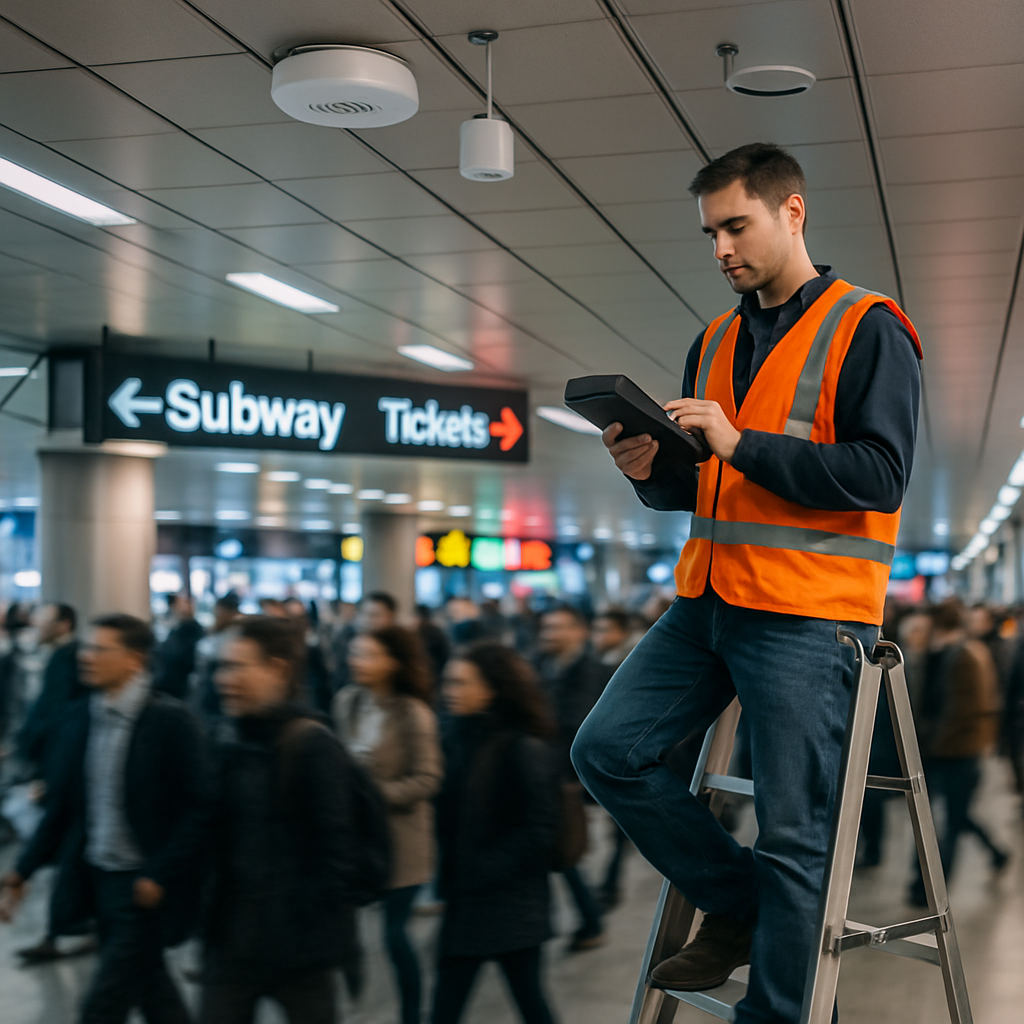
Macro cells on rooftops can no longer provide sufficient coverage and capacity in dense "urban canyons." A Distributed Antenna System (DAS) is an ideal solution for large indoor venues like subway stations, airports, and shopping malls, bringing the network signal closer to users. Outdoors, a strategy of network densification using small cells—mounted on lamp posts and utility poles—fills coverage gaps and adds surgical capacity exactly where data demand is highest, significantly improving signal strength.


Leveraging AI and ML for Proactive Network Optimization

Human-led network management is too slow to react to the dynamic complexity of a modern urban network. Machine learning techniques are moving from academic research to practical application, enabling networks to become predictive and self-optimizing. This data-driven optimization approach is essential for managing the millions of simultaneous connections in a smart city.

Predictive Analytics for Traffic Forecasting

Use machine learning algorithms to analyze historical traffic data and forecast network congestion before it occurs. By predicting demand based on public events, transportation schedules, or even weather patterns, operators can pre-emptively provision resources or re-route non-essential data traffic. For example, an ML model could identify a developing traffic jam from municipal GPS data and automatically prioritize network slices for emergency services and first responders in that specific area.

Real-Time Resource Allocation with Machine Learning

Traditional Quality of Service (QoS) policies are often static and cannot adapt to changing network conditions. An ML-based optimization framework can adjust QoS policies dynamically, in real-time. This system can learn which applications are most sensitive to latency (e.g., VoIP) and which are bandwidth-heavy (e.g., cloud backups) and allocate packet priority accordingly. This ensures that key performance metrics are met for the most critical user applications, even during peak usage times.

Deep Reinforcement Learning for Dynamic Network Slicing

Network slicing, a key feature of 5G, allows a single physical network to be partitioned into multiple virtual networks, each tailored for a specific use case. Deep Reinforcement Learning (DRL) is an advanced technique that can automate the complex management of these slices. A DRL agent can autonomously learn the optimal resource allocation for each slice (e.g., massive IoT vs. enhanced mobile broadband) to maximize overall network efficiency and meet diverse Service Level Agreements (SLAs).


The Role of Next-Gen Architecture: SDN, NFV, and Edge

To achieve true, dynamic optimization, the underlying network architecture must be agile and programmable. Legacy hardware-centric networks are too rigid to manage the demands of urban environments. Software-Defined Networking (SDN), Network Functions Virtualization (NFV), and Edge Computing represent a fundamental shift toward a more responsive and intelligent infrastructure.

Using SDN for Centralized, Programmable Network Control

SDN decouples the network's control plane (which decides where traffic goes) from the data plane (which forwards the traffic). This provides a centralized, software-based view of the entire network. As the Open Networking Foundation explains, this abstraction allows operators to manage and optimize traffic flow from a single controller. For an ISP, this means you can deploy new services or change traffic-shaping policies in minutes via software, rather than in weeks through manual hardware configuration.

Edge Computing to Minimize Latency for Smart Cities

The rise of IoT sensors, connected vehicles, and augmented reality in cities demands ultra-low latency. It is no longer efficient to backhaul all data from these devices to a central cloud for processing. Edge computing is an architecture that places compute and storage resources closer to the end-user, often at the base of a cell tower or in a neighborhood data center. This minimizes data transmission distance, drastically cutting latency and reducing bandwidth strain on the core network.

Deploying Scalable Wireless Network Solutions

The backbone for all these advanced strategies—from small cells to edge nodes—is a robust, scalable wireless infrastructure. Modern urban optimization involves integrating a complex mix of technologies, including 5G, Wi-Fi 6, and fixed wireless access. Deploying flexible and scalable wireless network solutions is the prerequisite for successfully implementing SDN, edge computing, and AI-driven management. This ensures that as the city’s data demand grows, the network can scale efficiently without creating new bottlenecks.


A Future-Proof Framework for Urban Network Efficiency

Optimizing an urban network is not a one-time project; it is an ongoing process of adaptation. As of late 2025, technologies like 5G-Advanced and the full realization of smart cities are defining the next frontier of network performance. A comprehensive approach connects all these elements—physical, virtual, and predictive—into a single, cohesive strategy.

Case Note: 5G Network Slicing for Public Safety

Consider a real-world scenario: a large public festival in a downtown core. A telecom provider uses 5G network slicing to provision three distinct virtual networks on one physical infrastructure. The first is a dedicated, high-priority network slice for first responders, guaranteeing ultra-reliable low-latency communication (URLLC) for bodycams and secure comms, completely independent of public network congestion. A second "enhanced mobile broadband" slice manages the massive public traffic from attendees, while a third "massive IoT" slice handles data from smart trash bins and security sensors.

Best Practices for a Phased Optimization Approach

A "boil the ocean" approach is too costly and complex. Providers should adopt a phased roadmap for network optimization.

  • Phase 1: Audit and Optimize. Conduct a deep audit of the physical layer. Re-farm spectrum, deploy small cells and DAS in high-congestion zones, and optimize backhaul.
  • Phase 2: Virtualize and Centralize. Implement SDN and NFV to virtualize network functions and centralize control. This creates the agility needed for dynamic traffic management.
  • Phase 3: Automate and Predict. Layer on AI and ML models for predictive traffic forecasting and autonomous resource allocation, enabling a self-optimizing network.

This phased approach ensures each new technology layer is built on a stable foundation, leading to sustainable and enhanced network performance.


Conclusion: Building the Network for the Modern City

The connectivity challenge in high-density urban areas is undeniable, but the tools to meet it are available. Simply adding more hardware is no longer a viable or scalable solution. True network optimization is a multi-layered strategy that intelligently combines physical densification (small cells), flexible software control (SDN), and the predictive power of machine learning.

These strategies—from dynamic resource allocation to edge computing—are complex but essential for delivering the seamless, low-latency connectivity that modern businesses, smart cities, and residential users demand. If your team is ready to build a more resilient and efficient urban network, it’s time to move beyond traditional capacity planning.

Schedule a consultation for urban network optimization.

Matt Hawthorne
Matt Hawthorne
Senior Solutions Architect

Matt Hawthorne is a Senior Solutions Architect at Turn-key Technologies, specializing in designing and implementing secure networking, wireless, and cybersecurity solutions. With over a decade of experience helping organizations modernize their IT infrastructure, Matt partners with clients to deliver scalable systems that enhance performance and resilience.


Certifications:

• HPE Aruba Networking Certified Network Architect – Campus Access
• HPE ATP – Hybrid Cloud
• HPE Aruba Certified Switching Associate
• Aruba Product Specialist – CX 10000 Switch
• Fortinet Certified Associate Cybersecurity
• Fortinet Certified Fundamentals Cybersecurity

Optimizing Network Uptime: Key Strategies Pros Use to Enhance Performance & Reliability

1 min read

Optimizing Network Uptime: Key Strategies Pros Use to Enhance Performance & Reliability

Consistent network uptime is the bedrock of any modern organization's success. It’s the invisible framework that supports daily operations,...

Read More
Securing IoT Devices on Your Network: Best Practices to Protect Against Hackers and Cyber Threats

7 min read

Securing IoT Devices on Your Network: Best Practices to Protect Against Hackers and Cyber Threats

The Internet of Things (IoT) has brought incredible convenience and efficiency to organizations of all sizes. From smart sensors monitoring...


Read More
How Network as a Service Transforms Enterprise IT

How Network as a Service Transforms Enterprise IT

Enterprise networks are aging, complex, and expensive to maintain. CIOs, operations leaders, and finance stakeholders are under pressure to modernize...

Read More