

BEST FOR
Warehouses, distribution centers, fulfillment facilities, logistics hubs, storage environments, shipping facilities, and multi-building operations.
Turn-key Technologies designs and supports wireless networking solutions for warehouses, distribution centers, fulfillment facilities, and logistics operations across Tennessee. From coverage and capacity planning to access-point deployment, switching, network visibility, infrastructure integration, and ongoing support, we help organizations build wireless environments that better support mobile devices, scanners, workstations, cameras, operational systems, and future growth.
A warehouse wireless networking solution combines access points, switching, network design, management tools, and supporting infrastructure to provide reliable connectivity across storage areas, aisles, loading zones, shipping and receiving areas, offices, and other operational spaces. The goal is to create a wireless environment that is easier to manage, monitor, troubleshoot, and expand as facility and device requirements change.
Warehouses, distribution centers, fulfillment facilities, logistics hubs, storage environments, shipping facilities, and multi-building operations.
Create more consistent wireless access for handheld scanners, mobile devices, workstations, operational systems, security devices, and staff.
Wireless design, access points, switching, network configuration, visibility tools, infrastructure planning, documentation, and ongoing support.
Warehouse environments can create difficult wireless conditions because of large floorplans, tall racking, changing inventory, mobile users, device density, loading areas, and long distances between network spaces. Without coordinated planning, wireless performance can become inconsistent and difficult to troubleshoot.
Inconsistent Warehouse Coverage
Aisles, loading areas, storage zones, offices, and remote parts of the facility may experience weak or inconsistent connectivity.
Roaming & Device Movement
Handheld scanners, mobile computers, tablets, and other devices may move continuously across the facility and require consistent connectivity between coverage areas.
Difficult Troubleshooting
Limited network visibility can make it harder to determine whether connectivity issues originate from wireless coverage, interference, switching, devices, or supporting infrastructure.
Disconnected Network Planning
Wireless, switching, cabling, security systems, automation, and warehouse technology may be upgraded separately, creating infrastructure inconsistencies over time.
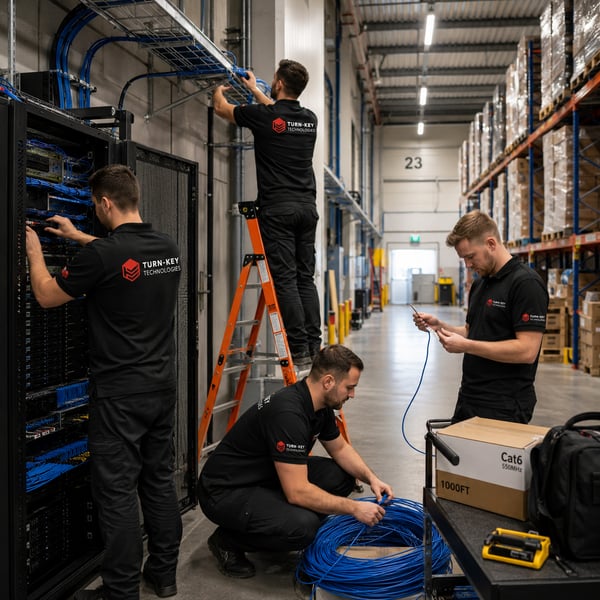
A strong warehouse wireless environment combines coverage planning, access points, switching, network visibility, structured infrastructure, and ongoing support so operational teams can maintain reliable connectivity throughout the facility.
Plan wireless coverage around warehouse layouts, racking, device density, loading zones, work areas, offices, and anticipated operational growth.
Deploy and configure access points based on coverage, capacity, mounting locations, network connectivity, and facility requirements.
Coordinate wireless connectivity with switching, uplinks, power, segmentation, network capacity, and the infrastructure supporting each access point.
Use network visibility and management tools to help IT teams identify performance issues, client behavior, and connectivity trends.
Coordinate access points with fiber and copper cabling, pathways, telecommunications spaces, switching, and supporting network infrastructure.
Support configuration, troubleshooting, system health, optimization, and future wireless expansion as facility requirements evolve.
Well-planned wireless infrastructure gives IT and operations teams a stronger foundation for mobile workflows, connected systems, device growth, troubleshooting, and future facility expansion.
Improve connectivity across warehouse aisles, storage areas, loading zones, offices, and other operational spaces.
Improve visibility into wireless performance and network conditions so IT teams can identify connectivity issues more efficiently.
Support handheld devices and other mobile technology as users move throughout the facility.
Plan capacity, switching, cabling, and access-point infrastructure so future devices, systems, and facility changes can be incorporated more cleanly.
Each phase moves the organization from current network conditions toward a better-planned, configured, validated,
documented, and supported wireless environment.
01
Review existing access points, switching, coverage challenges, device requirements, network infrastructure, facility layout, and known performance issues.
02
Plan access-point locations, coverage, capacity, switching, network connectivity, segmentation, and supporting infrastructure.
03
Install and configure wireless infrastructure, validate connectivity, and confirm that the environment operates as intended.
04
Provide documentation, troubleshooting, optimization, health monitoring, and ongoing support options where included.
Turn-key Technologies combines wireless networking expertise with wired networking, structured cabling, physical security, and managed services capabilities, helping warehouse and logistics organizations coordinate wireless infrastructure with the broader technology environment it depends on.
Wireless environments planned alongside switching, routing, cabling, and broader network infrastructure.
Access-point connectivity coordinated with structured cabling, pathways, telecommunications spaces, and network equipment.
Network management and visibility tools that help IT teams better understand wireless performance and connected devices.
Support options for troubleshooting, optimization, infrastructure changes, and future network expansion.
“Turn-key Technologies helped us create a much more consistent wireless environment across our warehouse and shipping areas. Our handheld devices stay connected more reliably, troubleshooting is easier, and our IT team has much better visibility into what is happening across the network.”
Brian Foster
Director of IT Operations
Turn-key Technologies supports warehouse and logistics environments with wireless networking, switching, structured cabling, fiber infrastructure, network visibility, testing, labeling, and documented project delivery.

Turn-key Technologies’ HPE Networking recognition reflects deep networking expertise that supports modern wired and wireless environments across complex facilities.
Technical credentials, infrastructure standards, and testing practices that support
reliable wireless and network environments.
Early wireless planning helps logistics organizations coordinate coverage, access points, switching, cabling, mobile devices, facility layouts, and future capacity before connectivity limitations become operational problems.
Plan access-point locations, switching, cabling, pathways, and network spaces before the facility is complete.
Reassess wireless coverage when racking, storage zones, loading areas, offices, or operational layouts change.
Evaluate existing access points, switching, cabling, capacity, and management tools before replacing wireless infrastructure.
Plan wireless capacity for additional handheld devices, scanners, cameras, operational systems, and future connected technologies.
Turn-key Technologies supports warehouse and logistics wireless networking projects across Tennessee, with a strong focus on Eastern Tennessee and surrounding growth markets.
These answers address common considerations when warehouses, distribution centers, and logistics facilities are improving Wi-Fi coverage, supporting mobile devices, or modernizing network infrastructure.
A warehouse wireless networking solution may include access points, switching, network configuration, monitoring and management tools, structured cabling, fiber infrastructure, documentation, and ongoing support.
Warehouse environments can include large open areas, tall racking, changing inventory, long distances, mobile users, and varying device density. These conditions can affect wireless coverage and make careful planning important.
Yes. A properly planned wireless network can support handheld scanners, mobile computers, tablets, and other connected devices used throughout warehouse and logistics operations.
Improving roaming typically involves evaluating access-point placement, coverage overlap, network configuration, device behavior, and the physical characteristics of the facility.
Not automatically. Existing access points should be evaluated for performance, capacity, support status, compatibility, network requirements, and whether they continue to meet operational needs.
Organizations should review current coverage, device density, facility layout, access points, switching, network capacity, cabling, management tools, known connectivity issues, and anticipated operational growth before planning a wireless refresh.
Whether you are replacing aging access points, improving coverage, supporting more mobile devices, expanding operations, or planning connectivity for a new facility, Turn-key Technologies can help assess your current environment and build a wireless networking solution around your operational requirements.
.png?width=1920&height=1080&name=TTI%20Web%20background%20(2).png)
Tony Ridzyowski:
Tony Ridzyowski:
Tony Ridzyowski: