

Enterprises Are Starting to Decentralize Their Network Architectures
The rise of cloud computing has compelled enterprises to pivot away from data center hyper-consolidation toward more decentralized network...
2 min read
Craig Badrick is President and CEO of Turn-key Technologies, Inc., bringing extensive experience in wireless communications and IT infrastructure across education, healthcare, enterprise, government, and hospitality environments. His expertise includes Wi-Fi and wireless networking, voice over Wi-Fi, wireless telephony, paging, emergency communications, network optimization, load balancing, backup systems, message archiving, data protection, firewalls, and spam filtering. Craig also brings deep ...
Craig Badrick
Updated on
January 25, 2017
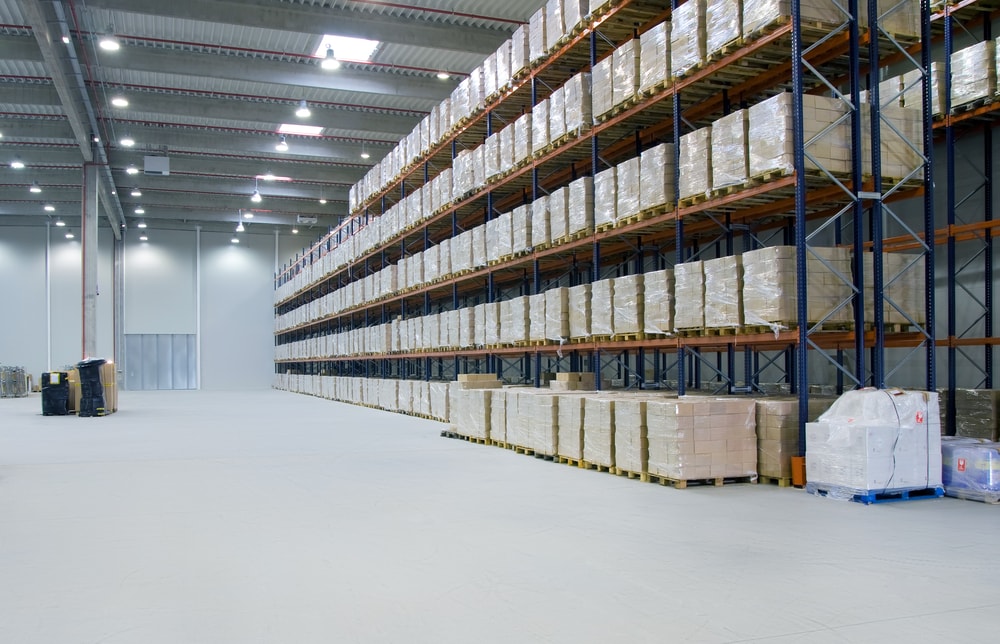
What began as the IoT (Internet of Things) has rapidly become the IoE (Internet of Everything). Monitors, sensors, and automated devices aren't new around the warehouse. What is new about IoT in the warehouse is the ability for those devices to transmit the data collected to a centralized data center, where it can be analyzed both per device and collectively, to yield valuable information and insight to the warehouse and to the business as a whole.
Hence, the revolutionary part of the IoT isn't just the devices that make it up, but rather the data that is gleaned from it. Businesses can see and understand warehouse and supply chain activities on both a granular and a holistic level.
Here are a few of the ways that the IoT is making an impact in the warehouse and across the supply chain.
IoT devices such as robotics units responsible for order picking actually do more than simply assemble orders. These devices are capable of collecting tons of data, including data on inventory, the efficiency of the layout of the warehouse floor, and even data relative to its own maintenance and repairs.
ERP software is useless without data. Using data from the IoT devices within the warehouse and across the entire supply chain, ERP software is fed with current and actionable data so that it can gather and assemble a complete picture of the business and where it is headed in the future.
From the time a shipment is delivered through the stocking process and down to the point at which it is shipped out, IoT devices collect and transmit information. This information tells the warehouse which suppliers and carriers are performing best, what the ideal amount of inventory is, and many other aspects of managing inventory.
Finding the most efficient routes, determining the ideal temperature, humidity, etc. for transporting and storing any given material, and even assuring that trucks are loaded and unloaded in the most efficient manner possible -- IoT devices can do all of this and more.
IoT in the warehouse can also keep track of when equipment and machines have been repaired or when routine maintenance has been performed. Then, it can track the performance of the various units over time, and determine the ideal time increments for regular maintenance in order to keep repairs, costs, and downtime at a minimum, but productivity to a maximum.
IoT in the warehouse is revolutionizing the entire supply chain. Is your warehouse network up to the job of enabling all those IoT devices? Get your FREE networking site survey today!
Have questions about your IT environment? Tell us what you're working on and our team will help you identify the right next step.
The rise of cloud computing has compelled enterprises to pivot away from data center hyper-consolidation toward more decentralized network...

After partnering with TTI, the Warwick Valley Central School District was able to provide everything faculty and students needed from their wireless...
In the era of AI and the internet of things, it seems enterprises are returning to data processing ways of the past — and for good reason.