

BEST FOR
Municipal buildings, administrative offices, public facilities, operations centers, multi-building government sites, public-safety facilities, and other government environments.
Turn-key Technologies designs and supports wired networking solutions for government organizations across New Jersey. From switching and routing to fiber and copper infrastructure, network segmentation, visibility, documentation, and ongoing support, we help public-sector environments build wired networks that better support staff, applications, wireless access points, connected systems, and future technology growth.
A government wired networking solution combines switching, routing, structured cabling, fiber and copper connectivity, network architecture, segmentation, management tools, and supporting infrastructure to connect administrative, operational, public-facing, and technology environments. The goal is to create a network that is easier to manage, monitor, troubleshoot, document, and expand as agency requirements evolve.
Municipal buildings, administrative offices, public facilities, operations centers, multi-building government sites, public-safety facilities, and other government environments.
Create a stronger wired foundation for staff, applications, wireless access points, phones, security systems, workstations, and other connected technology.
Switching, routing, fiber and copper connectivity, segmentation, network visibility, structured cabling integration, documentation, and ongoing support.
Government environments often combine administrative, operational, public-facing, security, and technology systems across different facilities. Without coordinated planning, switching, cabling, uplinks, segmentation, and network management can become fragmented and harder to maintain.
Growing Network Demand
More users, applications, access points, connected systems, and devices can place increasing demand on switching, uplinks, and network capacity.
Aging Network Components
Older switches, cabling, uplinks, and network hardware may limit performance, visibility, supportability, or future infrastructure expansion.
Difficult Troubleshooting
Limited network visibility can make it harder for IT teams to identify whether issues originate from switching, cabling, uplinks, configuration, or connected systems.
Disconnected Infrastructure Planning
Switching, routing, wireless, structured cabling, security systems, and other government technology may be upgraded separately, creating inconsistencies across facilities.
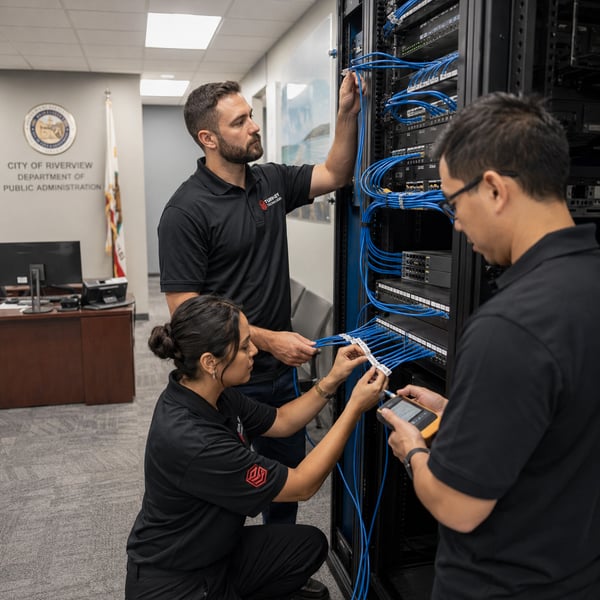
A strong government wired network combines switching, routing, segmentation, fiber and copper infrastructure, visibility, and ongoing management so IT teams can support staff, applications, public-facing systems, wireless infrastructure, and connected technology more consistently.
Plan wired network architecture around facilities, users, applications, connected systems, traffic requirements, growth, and operational priorities.
Deploy and configure switching infrastructure that supports endpoints, wireless access points, connected systems, uplinks, and network capacity.
Organize network traffic and connected systems using routing, VLANs, segmentation, and configuration practices aligned with operational requirements.
Use network visibility and management tools to help IT teams identify infrastructure health, connected devices, traffic conditions, and performance issues.
Coordinate switching, telecommunications spaces, uplinks, backbone connectivity, building-to-building connections, and endpoint infrastructure with structured cabling.
Support configuration, troubleshooting, optimization, infrastructure changes, documentation, and future network expansion.
Well-planned wired infrastructure gives government IT teams a stronger foundation for supporting staff, applications, wireless systems, connected technology, troubleshooting, and future facility requirements.
Create a stronger wired foundation across administrative offices, public facilities, operational spaces, network rooms, and other connected government environments.
Improve visibility into network conditions so IT teams can identify switching, connectivity, configuration, and infrastructure issues more efficiently.
Gain clearer insight into switches, connected devices, network traffic, and infrastructure conditions across government facilities.
Plan switching, fiber, copper, uplinks, and network architecture so future users, systems, facilities, and technology changes can be incorporated more cleanly.
Each phase moves the organization from current network conditions toward a better-planned, configured, validated, documented, and supported wired environment.
Review existing switches, routing, telecommunications spaces, cabling, uplinks, connected systems, configuration, capacity, and known performance issues.
Plan switching, routing, segmentation, backbone connectivity, network capacity, infrastructure integration, and future expansion.
Install and configure network infrastructure, validate connectivity, document the environment, and confirm that the network operates as intended.
Provide documentation, troubleshooting, optimization, infrastructure changes, health monitoring, and ongoing support options where included.
Turn-key Technologies combines wired networking expertise with wireless networking, structured cabling, physical security infrastructure for connected systems, and managed services capabilities, helping government organizations coordinate switching, routing, cabling, backbone connectivity, connected systems, and network operations within the broader technology environment.
Wired infrastructure planned alongside switching, routing, wireless networking, structured cabling, and broader network architecture.
Switching and network connectivity coordinated with structured cabling, pathways, telecommunications spaces, backbone links, and endpoint infrastructure.
Network management and visibility tools that help IT teams better understand infrastructure conditions and connected systems.
Support options for troubleshooting, optimization, network changes, infrastructure refreshes, and future expansion.
“Turn-key Technologies helped us create a more organized and manageable network across our facilities. Our IT team now has better visibility into the infrastructure, troubleshooting is easier, and we have a stronger foundation for supporting future technology requirements.”
James Carter
Director of Information Technology
Turn-key Technologies supports government organizations with switching, routing, wireless networking, structured cabling, fiber infrastructure, network visibility, testing, labeling, and documented project delivery.

Turn-key Technologies’ HPE Networking recognition reflects deep expertise across modern switching, wired networking, wireless networking, and public-sector network infrastructure environments.
Technical credentials, networking expertise, infrastructure standards, and testing practices that
support reliable wired network environments across government facilities.
Early network planning helps government organizations coordinate switching, routing, segmentation, structured cabling, backbone connectivity, telecommunications spaces, and future capacity before infrastructure limitations become operational problems.
Plan telecommunications spaces, switching, fiber, copper cabling, uplinks, and endpoint connectivity before new facilities are complete.
Reassess wired infrastructure when administrative offices, public areas, operational spaces, network rooms, or facility layouts change.
Evaluate existing switches, routing, cabling, backbone capacity, configuration, and management tools before replacing network infrastructure.
Plan network capacity for additional users, access points, facilities, applications, security systems, and other connected technology.
Turn-key Technologies supports government wired networking projects across New Jersey, helping public-sector organizations plan reliable switching, routing, fiber connectivity, network segmentation, structured cabling integration, and broader wired network infrastructure.
These answers address common considerations when government organizations are upgrading switching, expanding network capacity, modernizing infrastructure, or improving network visibility.
A government wired networking solution may include switching, routing, network segmentation, fiber and copper connectivity, structured cabling integration, network management tools, documentation, and ongoing support.
Structured cabling provides the physical copper and fiber pathways connecting devices, buildings, and network equipment. Wired networking includes the active infrastructure and configuration—such as switches, routing, segmentation, and network management—that uses those physical connections.
Switches should be evaluated based on performance, capacity, support status, compatibility, port requirements, uplink capacity, power requirements, visibility, and whether they continue to meet current and anticipated network needs.
Segmentation can help organizations separate users, devices, applications, operational systems, and traffic types so the network is easier to organize and manage according to operational and security requirements.
Yes. Wireless access points depend on wired switching, cabling, uplinks, power, and network capacity. Planning wired and wireless infrastructure together can help reduce bottlenecks and infrastructure mismatches.
Organizations should review switches, routing, cabling, building-to-building connectivity, network capacity, segmentation, wireless infrastructure, connected systems, management tools, known performance issues, and anticipated technology growth before planning a refresh.
Whether you are replacing aging switches, expanding network capacity, improving visibility, renovating facilities, or modernizing broader technology infrastructure, Turn-key Technologies can help assess your current network and build a wired networking solution around your operational requirements.

Tony Ridzyowski: